Men's & Women's
Olympic singles competition takes place over two days. Athletes complete two runs each day; all four times are added, and the fastest cumulative time wins. Men and women race on the same track from different start positions.
 Luge Federationof IndiaNational governing body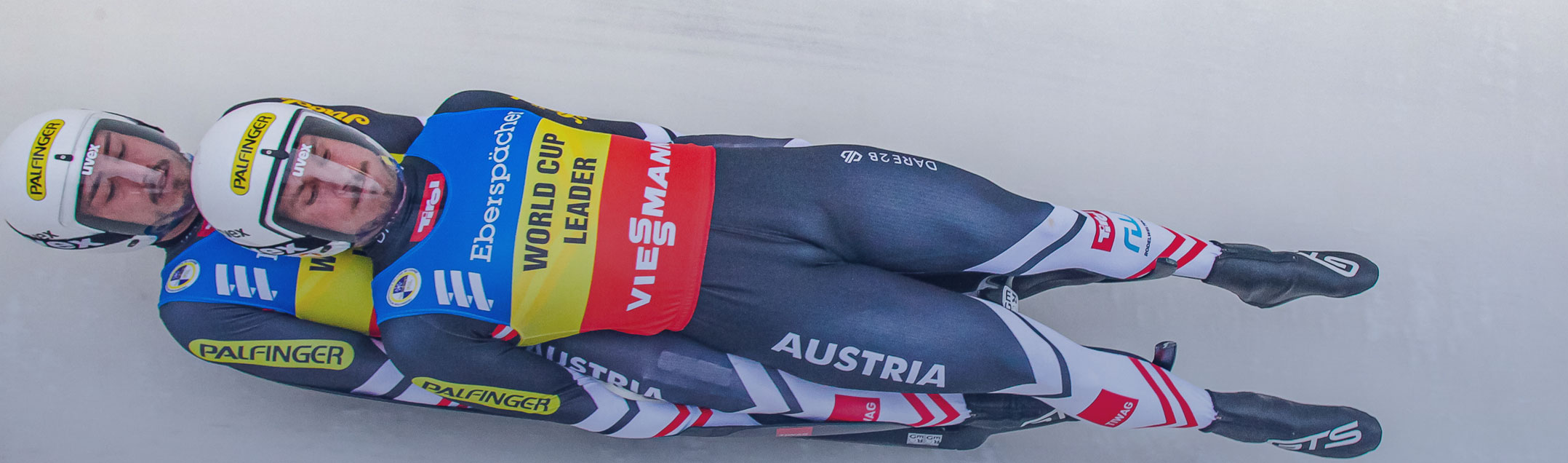
Discover Luge
The sport
Luge riders hurtle down slippery ice tracks at speeds exceeding 90 mph. Competitors lie on their backs on a small sled with their feet stretched forward, racing without brakes and relying on reflexes, precise body pressure and complete concentration for steering.
Runs are timed to the thousandth of a second, making speed, consistency and precision decisive.
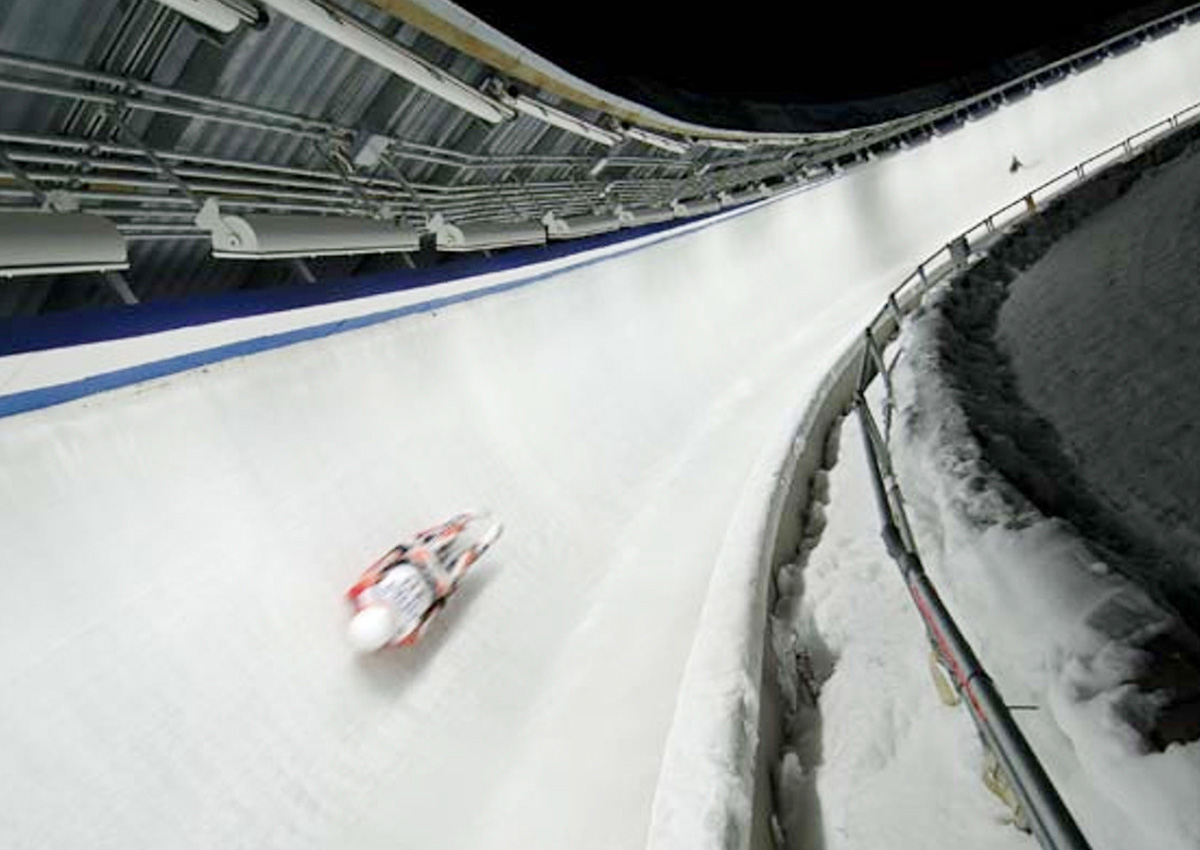
Competitors use their feet, calves and shoulder muscles to direct the sled. The main steering mechanisms are the two elongated runners, or kufens, on which the athlete rests their feet. A slight nudge can drastically shift direction.
To maximise speed, athletes keep their heads low within the pod—the main body of the sled. Tight-fitting race suits and shoes with pointed toes reduce aerodynamic drag.
Every run counts. Timing to the thousandth of a second rewards an explosive start, a clean racing line and the ability to remain precise under pressure.
Competitive luge
The first international luge race took place in Davos in 1883, with competitors racing along an icy four-kilometre road between Davos and Klosters.
Olympic singles competition takes place over two days. Athletes complete two runs each day; all four times are added, and the fastest cumulative time wins. Men and women race on the same track from different start positions.
Doubles is a one-day competition in which pairs complete two runs. Every run counts, and the fastest cumulative time determines the winner.
The Olympic four-run format is designed to reward consistency, endurance and pressure management. Most World Championship and World Cup singles races are contested over two runs.
Infrastructure
Artificial tracks use specially designed banked curves and walled straights. Most are refrigerated, though some—such as St. Moritz—operate without artificial cooling. Artificial-track luge has been an Olympic discipline since 1964.
Read regulations ↗Natural tracks adapt existing mountain roads and paths. Artificially banked curves are not permitted, the surface must remain horizontal, and the track is naturally iced without artificial refrigeration.
Read regulations ↗Watch & learn
Explore Olympic Channel features explaining the sport, its speed and the athlete experience.
Open video gallery ↗